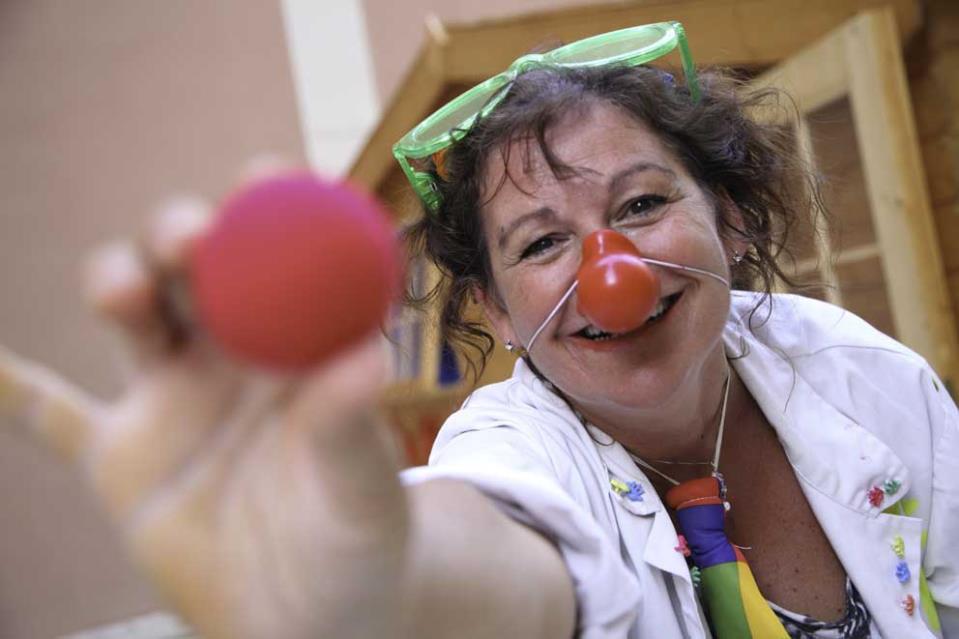
Exploring the Role of Laughter and Emotional Support in Healthcare
Angle
Exploring how organisations such as Dr Klown Malta use emotional support and communication to impact patient experiences in healthcare settings.
Medium
- 3-camera setup for interview (2 shot main camera MS, 1 CU on Emily , 1 CU on Corinne)
- conversational interview style
- will be filmed at MCAST, Mosta
Interviewee
The interviewee chosen for this project was Corinne Wood, Vice President of Dr Klown.
She was selected due to her extensive involvement within the organisation, including being one of the first members of Dr Klown Malta.
Additionally, Wood has participated in interviews before and public appearances, making her comfortable speaking on camera and able to communicate clearly about the role of emotional support in healthcare environments.
Research
Meeting – Corinne Wood 23rd April
Meeting was conducted with Corinne Wood, Vice President of Dr Klown, in preparation for the filmed interview.During the meeting, information regarding the organisation’s role, volunteer training, healthcare environments, and emotional support practices was discussed. The meeting also helped establish the interview structure, filming approach, and communication style.
Historical Context Research
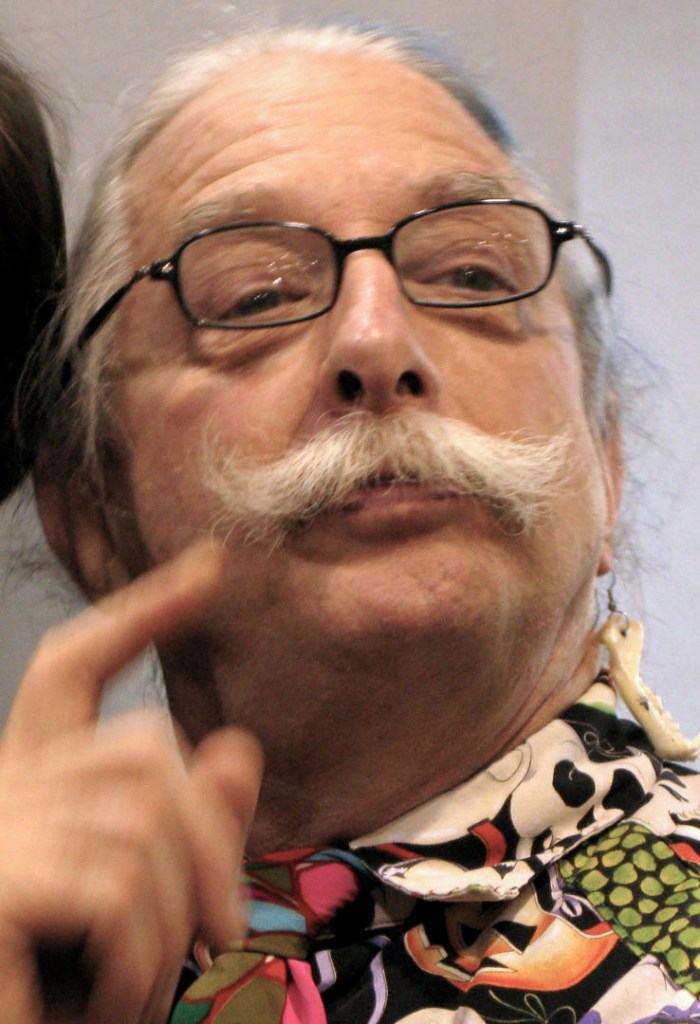
Patch Adams, American physician and social activist
The concept of clown doctors and humour within healthcare became internationally recognised through Patch Adams, an American physician and social activist who promoted emotional support and humour within healthcare during the 1960s and 1970s. In 1971, he founded the Gesundheit! Institute, believing healthcare should focus not only on illness, but also on patients’ emotional wellbeing and human connection.
The professional development of hospital clowning later expanded in 1986 through Michael Christensen, co-founder of the Big Apple Circus in New York. Christensen created the Clown Care Unit, one of the first professional hospital clown programmes, where trained performers worked in hospitals to emotionally support children during treatment and hospital stays. These developments contributed to the international growth of clown therapy organisations focused on communication, empathy, and emotional support within healthcare settings
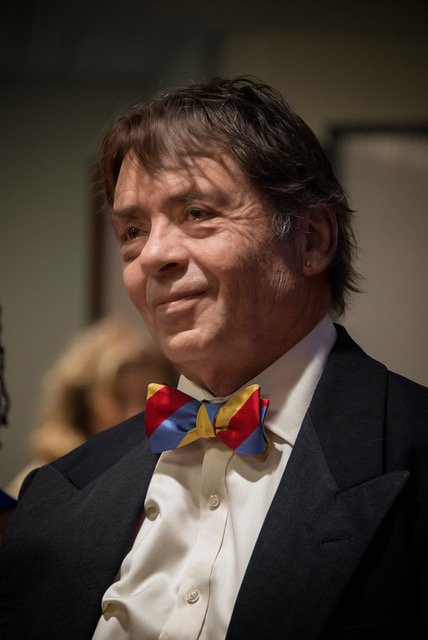
Michael Christensen , co-founder of the Big Apple Circus in New York
American University of Armenia (2015) Patch Adams, world-famous clown and doctor, inspires AUA community with heartfelt talk. Available at: https://chsr.aua.am/patch-adams-world-famous-clown-and-doctor-inspires-aua-community-with-heartfelt-talk/ (Accessed: 3 May 2026).
HCIM 2026 (2026 ) Michael Christensen. Available at: https://www.hcim2026.org/michael-christensen/ (Accessed: 3 May 2026).
About Dr Klown
Dr Klown is a non-governmental organisation (NGO) in Malta that provides clown therapy as a form of emotional and psychological support within hospitals and care environments. The organisation focuses on reducing stress and anxiety, creating a more comforting environment, and supporting and impowering both patients and support their families.
The organisation works across hospitals, care homes, and autism schools. Its volunteers, referred to as “clown doctors,” are not medical doctors but receive specialised training in communication, empathy, healthcare awareness, and performance before working in sensitive environments.
Founded in 2011, Dr Klown has developed a trained volunteer network and increased awareness surrounding clown therapy in Malta. According to the organisation’s official website, it forms part of an international network of over 750 clown organisations spread across more than 70 countries worldwide.
Training for clown doctors takes approximately one year and includes psychological assessment and professional preparation before volunteers begin working in healthcare settings.
Sources used
Dr Klown (N.D) About. Available at: https://drklown.org/about/ (Accessed: 3 May 2026).
Lovin Malta (2021) Dr Klown documentary. Available at: https://lovinmalta.com/sponsored/dr-klown-lovin-malta-documentary/ (Accessed: 3 May 2026).
Previous interviews / media
The Malta Independent (2014) Bringing a smile to sick children: ‘A clown is like aspirin, only he works twice as fast’. Available at: https://www.independent.com.mt/articles/2014-10-15/local-news/Bringing-a-smile-to-sick-children-A-clown-is-like-aspirin-only-he-works-twice-as-fast-6736123787 (Accessed: 3 May 2026.
In this previous interview of Corinne Wood, there were occasional moments of stuttering and pauses; however, the interviews still maintained a natural and conversational flow. Her smiling expressions and openness contributed to a more approachable and authentic interaction, helping create a comfortable atmosphere throughout.
Although she did not always appear fully comfortable on camera in the interview, this may have been influenced by two factors. Firstly, this interview was conducted in Maltese, whereas Wood explained that she feels more comfortable communicating in English. Secondly, the footage viewed dated back to 2014, only a few years after Dr Klown was founded, meaning the organisation and its media presence were still relatively new at the time.
As one of the first members of Dr Klown and with now more than 16 years of experience within the organisation, Wood demonstrated familiarity with discussing the subject publicly and professionally. During our meeting with Corinne , she also explained that she has participated in multiple interviews throughout the years, which is expected to contribute to a more confident and natural interview environment for the final filmed production, which will be conducted in English.
Interviewee Stance / Opinion
Corinne Wood supports the importance of emotional support within healthcare settings. During the meeting and research process, she explained that communication, empathy, and interaction can positively impact patient wellbeing and help create a more comforting healthcare environment.
Organised Information
Research showed that volunteers undergo specialised training before working in hospitals and care settings, including communication skills, empathy, healthcare awareness, and improvisation. However, research highlighted many positive aspects of emotional support within healthcare, the interview will explore how these interactions work realistically in practice, whether all patients respond positively, and if there are situations where this approach may be more challenging or less effective.
Communication & Body Language
The interview will maintain a formal but friendly conversational. The discussion is expected to shift between more positive topics, such as emotional support and happiness within healthcare, and more serious moments when discussing challenges and difficult experiences. Maintaining this balance will help support a natural conversational flow throughout the interview.
Eye contact will remain consistent during the discussion to demonstrate active listening, engagement, and respect towards the interviewee. Open posture and attentive body language will also be maintained to encourage comfortable interaction and create a relaxed environment on camera.
As Corinne Wood is both a respected doctor and Vice President of Dr Klown, the interview approach will remain professional while also showing confidence and curiosity through questioning and interaction.
Designed Questions to Elicit Information from the Interviewee
INTRO: Can laughter really be medicine? Today I’m speaking with Corinne Wood from Dr Klown Malta to explorethe role of emotional support in healthcare.
- briefly explain what Dr Klown Malta does and your role within the organisation?
- What kind of training do volunteers go through before working in these environments?
- From your experience, do you believe laughter can genuinely impact a patient’s wellbeing?
- Each clown doctor seems to have a unique name, like Dr Buzz or Dr Peppina,what’s the story behind how these identities are created?
- Have you seen specific moments where your work made a noticeable difference to patients?
- Are there situations where this approach doesn’t work, or where patients respond differently?
- Do you think emotional support like this is something healthcare systems should be provided more?
CONCLUSION: Thank you very much for your time, and for sharing your perspective on the role of emotional support in healthcare.
Follow-up Questions to Ensure a Flowing Interview
The follow-up questions prepared for this interview may change depending on the interviewee’s responses and the natural direction of the conversation. Most follow-up questions are intended to encourage further explanation, elaboration, and more detailed examples.
Prepared Follow-up Questions
- Why do you think that is?
- How did that affect the patient?
- Was there a specific moment that stayed with you?
- How do you adapt in those situations?
- Has your perspective changed throughout the years?
- How do volunteers emotionally prepare for these environments?
- Would you say patients react differently depending on age or situation?
- How important is empathy within your work?
- Do you think emotional wellbeing is sometimes overlooked in healthcare?
Predicted Answers & Planned Follow-up Questions
Question 1
Question: Could you briefly explain what Dr Klown does and your role within the organisation?
Predicted Answer: Dr Klown provides emotional support through clown therapy within hospitals, care homes, and healthcare environments. Corinne Wood may also explain her role as Vice President and Dr clowns.
Follow-up Question:
- How has the organisation developed throughout the years?
- What motivated you to become involved in Dr Klown?
Question 2
Question:What kind of training do volunteers go through before working in these environments?
Predicted Answer:Volunteers undergo specialised training involving communication skills, empathy, healthcare awareness, psychological preparation, and improvisation before entering healthcare environments.
Follow-up Question:
- Why is emotional preparation important for this role?
Question 3
Question: From your experience, do you believe laughter can genuinely impact a patient’s wellbeing?
Predicted Answer: Laughter and emotional support may help reduce stress, anxiety, and fear within healthcare environments while creating more comforting interactions for patients and families.
Follow-up Question:
- Do you think emotional support can change how patients experience treatment?
Question 4
Question:Each clown doctor seems to have a unique name, like Dr Buzz or Dr Peppina. What’s the story behind how these identities are created?
Predicted Answer: Each clown doctor develops a different identity and personality to interact with patients in unique and creative ways.
Follow-up Question:
- Do these personalities naturally develop over time?
- What was your Dr Klown name?
Question 5
Question:Have you seen specific moments where your work made a noticeable difference to patients?
Predicted Answer: Corinne Wood may share emotional or memorable experiences where interaction positively affected patients or families emotionally.
Follow-up Question:
- Was there a particular moment that stayed with you personally?
- How do families usually react in those situations?
Question 6
Question:Are there situations where this approach doesn’t work, or where patients respond differently?
Predicted Answer: Not every patient reacts positively to interaction, and clown doctors may need to adapt depending on age, emotional state, or medical condition.
Follow-up Question:
- How do you adapt your communication in those situations?
Question 7
Question: Do you think emotional support like this is something healthcare systems should provide more?
Predicted Answer: Healthcare systems may benefit from including more emotional support services alongside medical treatment.
Follow-up Question:
- Would you like to see more collaboration with healthcare institutions in the future?
Equipment & Technical Setup
A three-camera setup was used during the interview production in order to create a more dynamic and conversational visual style.
- Canon EOS 250D: Lens: 35mm (Used for the interviewer shot)
- Canon EOS R6 Mark III: Lens: 24–70mm( Used for the interviewee Corinne Wood)
- Canon EOS RP: Lens: 24–105mm (Used as the main two-shot camera)
Audio Equipment
- RØDE Wireless GO II lapel microphone will be used for audio recording.
Lighting Setup
- Two LED lights with softboxes were used as the main lighting sources to create soft and balanced lighting.
- One Godox LED light was used as a backlight to help separate the subjects from the background and create more visual depth.
Clothing & Camera Considerations
Before filming, the interviewee was advised to avoid solid white or solid black clothing, as well as fine patterns or stripes, since these can create visual issues and sensitivity on camera. This was done to ensure a cleaner and more visually balanced final production.
Location
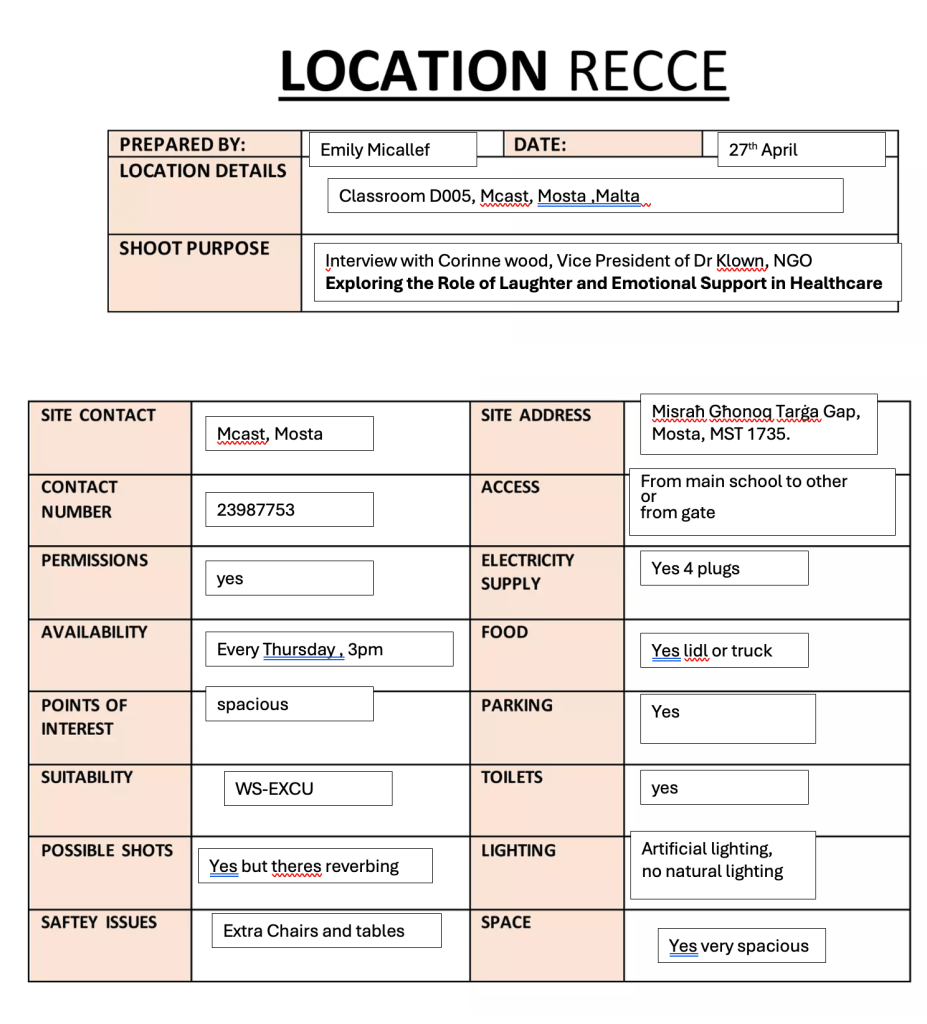
The interview was filmed indoors at MCAST Mosta to ensure controlled acoustics and minimal background noise. A three-camera setup was used to create a more conversational atmosphere throughout the interview. As no additional B-roll footage will be included, the multiple camera angles help maintain visual interest and engagement for the audience. This setup also places greater focus on the interaction and communication between myself and Corinne Wood, highlighting both verbal and non-verbal communication throughout the discussion..
 Emily's Reporting
Leave a comment